
Crafting a Powerful Value Proposition: The Heart of Your Business Model Canvas
Learn how to create a winning business model canvas value proposition that speaks to both logic and emotion. Discover proven frameworks, real-world value proposition examples, and why emotional triggers drive SME growth strategy.
Why the Value Proposition Drives Your Entire Business Model
Within the Business Model Canvas, the Value Proposition is the central box—and for good reason. It’s the promise that links your internal capabilities to customer desires.
In the Business Model Canvas (BMC), the Value Proposition sits right at the centre. And for good reason: it’s the bridge between what your business offers and what your customers truly need.
Too often, SMEs describe their products in purely functional terms: faster, cheaper, better. While these are important, they miss the real reason people choose one product over another: emotions.
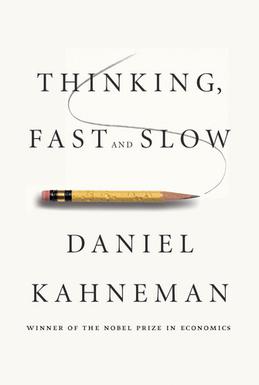
As Nobel Prize winner Daniel Kahneman explains in Thinking, Fast and Slow, our brains have two systems. System 1 is fast, emotional, and intuitive. System 2 is slower, deliberate, and logical. Customers almost always decide with System 1 (emotion) first — then justify with System 2 (logic) afterwards.
This means your value proposition must connect both emotionally and logically if you want it to stick.
Step 1: Unearth the Emotional Hook
Think of the last time you bought something. Was it really just about technical performance?
People don’t just buy a Tesla for electric efficiency. They buy into a vision of sustainability, innovation, and status.
Customers don’t choose Apple only for specifications. They buy the feeling of being part of a creative, forward-thinking tribe.
Even in B2B, companies don’t pick a supplier just for cost savings. They want trust, peace of mind, and reduced risk.
Your job is to ask: What emotion do we want our customers to feel when they use our product or service?
Is it security, joy, status, belonging, freedom, or control? These emotional drivers are often the real reason behind the purchase.
Step 2: Add the Rational Proof
Once you’ve identified the emotional connection, anchor it with logic. Customers still need rational justification. That’s where you highlight measurable benefits like:
- Saving time or money
- Improving efficiency
- Increasing revenue
- Reducing risk
- Ensuring quality or compliance
A strong value proposition balances both sides:
“We help SMEs grow confidently (emotion: security, empowerment) by giving them investor-ready brand tools that cut marketing costs by 30% (logic: measurable saving).”
Step 3: Test the Three “Why” Questions
A useful exercise is to answer three simple but powerful questions:
Why you? → What makes your offer different or unique?
Why now? → Why should customers care about this today?
Why should they believe you? → What evidence (testimonials, data, partnerships) supports your claim?
If your draft value proposition fails at any of these, refine it until both the heart (emotion) and head (logic) are addressed.
Step 4: Keep It Clear, Short, and Shareable
A value proposition is not a mission statement. It should be concise, customer-focused, and easily repeatable. Test it out loud — if you can’t explain it in one or two sentences without jargon, it’s too complicated.
Key Takeaways for SME Growth Strategy
Your value proposition isn’t just another box in the Business Model Canvas. It is the heart of your business model.
Get it right, and every other element of your canvas — customer segments, channels, relationships, costs, and revenues — flows naturally. Get it wrong, and no amount of marketing spend will compensate.
Remember: customers buy with their hearts first, then with their heads. If your value proposition speaks to both, you’ve already won half the battle.
- Lead with emotion to capture System 1.
- Back it up with logic to satisfy System 2.
- Align the rest of your BMC—customer segments, channels, revenue—around this core promise.
A resonant business model canvas value proposition becomes the magnet for customers, investors, and partners alike.

Why Every SME Needs a Business Model Canvas (BMC) — and How It Helps You Write a Powerful Business Plan
If you're looking for a free business plan template, searching for business plan examples, or simply wondering how to write a business plan that actually attracts investors — you’re in the right place. The truth is, before you dive into any business plan template UK-style or download a free business plan format, it’s important to get your thinking structured. That’s where the Business Model Canvas (BMC) comes in.

Business Model Canvas: Define Your Market Context
Understanding your external environment is essential for building a strong Business Model Canvas. In Step 2 of the BMC, UK small businesses learn to define their customer segments, analyse competitors, and interpret their market context. These elements shape your marketing strategy, strengthen your value proposition, and determine how effectively you reach and retain your target market. By mastering the right side of the canvas, SMEs gain clarity, competitive advantage, and a deeper understanding of the customers and communities they serve.

Business Model Canvas: Build the Engine that Delivers
For many founders, branding and customer engagement feel like the exciting parts of building a business. But behind every strong brand is something even more important: a reliable engine that delivers the promise. This engine sits on the left side of the Business Model Canvas (BMC): the part most SMEs overlook. If the right side of the BMC is about selling the promise, the left side is about keeping the promise consistently.